Showing posts with label 1990s. Show all posts

Tuesday, 29 March 2011

Well known Japanese designers: part2

Yoji Yamamoto (born Oct 3, 1943)

-After he finished a digree in law, started fashion digree again in 1969.

-1981, Debut in Paris.
-He makes flagship stores in New York, Paris and Antwarp through 80s to 90s.
-He collaborates with many way.
e.g.) Adidas, Hermes, Mandarina Duck and Takeshi Kitano


Rei Kawakubo (born Oct 11, 1942)

-The founder of Comme des Garçons

-1973, she establiched her company.
-1982, opens her boutique in Paris.
-Her designs have inspired many other late designers.
e.g.) Martin Margiela, Ann Demeulemeester and Helmut Lang.


Junya Watanabe (born 1961)

-1984, he starts internship at Comme des Garçons as a pattern maker.

-1987, He promotes as a chief designer of Tricot knitwear line.
-1992, He starts his own line under the Comme Des Garçons name.
-1993, He begins showing in Paris.
-2007, He iss licenced by Converse to design a series of All-Star shoes


Nigo (Tomoaki Nagao)  (born Dec 23, 1970)

-He is a DJ and the creator of A Bathing Ape, known as Bape

-1993, His first store opens at Harajuku, Tokyo.
-2005, He launches the first store in New York.
-He collaborates with many other brand characters like SpongeBob Squarepants, Nintendo and Hello Kitty.


Monday, 28 March 2011

Well known Japanese designers: part1


Hanae Mori (born Jan 8, 1926)

-The only Japanese woman to have presented her collections on the runways of Paris and New York
-The first Asian woman as an official haute couture design house by the fédération française de la couturein France
-Opened in Japan in 1951, grew to become a $500 million international business by the 1990s


Kenzo Takada (born Feb 27, 1939)

-Settled in Paris in 1964
-His collection was presented in New York and Tokyo in 1971 and became success.
-Since 1993 the brand Kenzo is owned by LVMH.
-Aannounce his retirement in 1999
-In 2005, he reappeared as a decoration designer.


Issey Miyake (born Apr 22, 1938)
-Born in Hiroshima and witnessed and survived the nuclear bomb.
-1970, He founded the Miyake design studio.
-Late 80s, he started experimenting about pleating.
-1993, Pleats Please
-1999, he turned over to Naoki Takizawa to consentrate on researching


Michiko Koshino (born 1942)

-1978, She moved to London and opened up her first store in Covent Garden
-Her designs were worn by the Spice Girls, Placebo, and Natalie Imbruglia
-She became success in many way and created her big unbrella from fibre to lighter companies.


Sunday, 27 March 2011

80s to 90s, Japanese designers' challenges.


How many faces do you recognize?
They are famous Japanese designers who work internationally.
The answer will be in next post.


Cosplay, Another subculture from Japan

Probably, the origin of cosplay is from USA Halloween party, then SF masquerade party like Star Trek costumes. Then the culture came to Japan in 70s but it was very minority.
In 80s, Manga and Anime movement get becoming vital and some of people started wearing similar design costumes to Manga and Anime characters. 1990s, the trend becomes very popular because women Otaku increased very much. And now, cosplay becomes an everybody acceptable hobby.


This kind of subculture can see in London as well. Especially at Japan Expo, there are many cosplayers both Japanese and British.


So what is the background for this subculture?
I think that it is an extreme individual expression. since middle 90's, we have not had particular big trend in fashion. People had to choose styles by themselves or follow subdivided small pieces of trends every seasons. Cosplaying is very self-satisfied subculture, but it is seemed to be good hobby.

[copyrights]
Nippon Sunrise, Inc
1992 Naoko Takeuchi / Kodansha /TOEI Animation

Saturday, 26 March 2011

Manga, Anime, from Japanese subcultures.

1990s, it was the Golden age for Manga and Anime. Many famous works are made in the decades. And nowadays, one of Japanese main export items are Anime and Manga. These are becoming very common expressions in Japan and so do the other countries like USA and France. However, in fact, it was an English man who started introducing Japanese Anime to the world.

Chris Blackwell (born June 22, 1937) is the founder of Island Records. It became one of the most successful independent labels of the 1960s and 1970s. In 1991, He started Manga business with  Andy Frain. By middle 90s, Manga entertainment had spread out to USA and Australia more than the UK own.


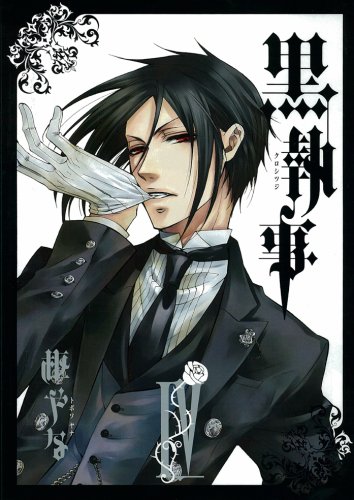
These are well known Manga and Anime. How many characters do you recognize?


The effect came up to Fashion business as well.
Japanese high street brand, UNIQLO collaborated with many anime and manga as wide T-shirt range. Hello Kitty (Did you know, it is officially an British cat!) has already become too famous for everyone. Even H&M tied up with it recently.


[copyrights]
1992 Naoko Takeuchi / Kodansha /TOEI Animation
1995 Gainax
Masashi Kishimoto/Hayato Date/Shueisha/Studio Pierrot/TV Tokyo/Viz Media
Toriyama Akira, Toei Animation
Masamune Shirow/Kodansha Ltd./Bandai Visual Co., Ltd./Manga Entertainment
Nintendo
 Nippon Sunrise, Inc
© 2006-2010 Tenkai-japan

Friday, 25 March 2011

Video games influence to...


1990, Super Nintendo and Super Mario, they made a video game storm all over the world. And still now, Super Mario is an iconic character that everybody can recognize. So it was natural that he became to see on Tee shirt at that moment.


Soon after, in 1994, Sony launches Play Station 1. What was the difference is Play Station 1 made available 3D graphics to use as video game. The screen is a famous software, Tomb Raider 1. I remember that I have been very surprised about it when I played PS1 first time.


So, what did they introduce to our world?
One is obviously to film, especially Hollywood. These technology helped improving special effect very much. Even some video games became actual film like this. And these video game cultures connected another small subculture, cos-play.


Thursday, 24 March 2011

1990s, I look for other subcultures.


Because I have already researched about main 1990s subcultures as my group work, I am not going to say about mainstreams such like grunge, Hip Hop, club cultures, drug and juvenile delinquency. That was enough after I watched Trainspotting. So I am going to research a subculture which is completely different. However, it was really hard to find out because almost all information I could get was those kind of things.
So I spotted 90s technology instead of music. It is clear that 1990s is a decade of soaring technology. Start from WWW(World Wide Web) in 1992, the Internet has spread out rapidly. Then Windows 95 introduced PC to each household. Everybody got mobile phones and they became smaller and smaller. At the same time video games also got popular. It started from Super Nintendo to Play Station 1. These produced a new group of people who are crazy for video games. They are often called 'Otaku'. The word is from Japanese which means people with obsessive interests, particularly anime, manga, or video games.
I am personally interested in it, so I am going to research it.